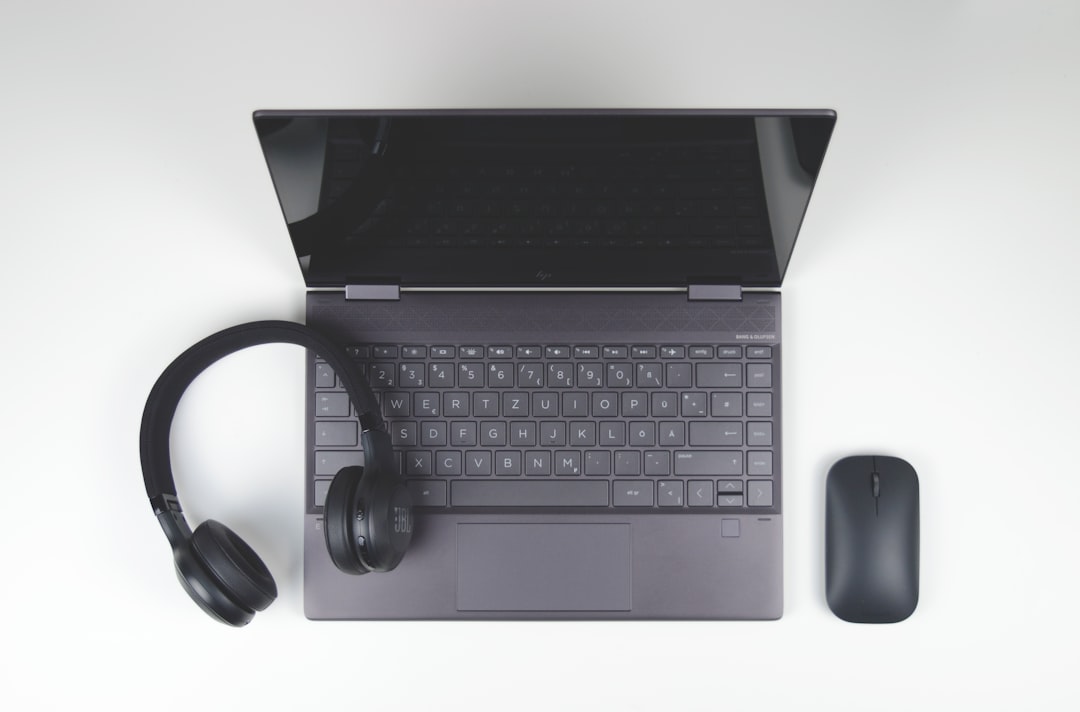
The HP EliteBook 840 G3, launched in 2016 with Intel’s 6th-generation Skylake processors, remains a frequent inquiry in India’s refurbished business laptop market. As someone who oversees Edify’s procurement and grading pipeline, I see dozens of these units flow through our Sarjapur facility each month. The question isn’t whether the 840 G3 was well-built (it was), but whether an eight-year-old design still delivers acceptable performance and longevity for professionals in 2026.
This review evaluates the EliteBook 840 G3 through the lens of refurbished value: real-world durability, component wear patterns our CheckMate system flags, and the trade-offs buyers face when choosing a 6th-gen Intel platform over newer alternatives. If you’re weighing budget against capability, this analysis will help you decide whether the 840 G3 fits your workflow or whether stepping up one generation makes better economic sense.
HP EliteBook 840 G3: Market Context and Business Positioning
HP introduced the EliteBook 840 G3 in early 2016 as the flagship 14-inch business ultrabook, targeting enterprise IT buyers who valued security, manageability, and MIL-STD-810G durability. At launch, it competed directly with the Lenovo ThinkPad T460 and Dell Latitude 7470, all three sharing Intel’s 6th-generation Core architecture and DDR4 memory.
According to IDC’s Asia/Pacific PC Tracker, commercial notebook shipments in India grew 12 percent year-on-year in 2016, driven by Windows 10 enterprise migrations and government digitization programs. The EliteBook 840 G3 captured significant share in banking, consulting, and IT services sectors, where HP’s vPro support and three-year on-site warranty justified the premium over consumer models.
In 2026, the refurbished market for 840 G3 units reflects that original enterprise deployment. Most inventory comes from corporate lease returns, typically showing 3 to 5 years of office use. Edify’s procurement data shows the 840 G3 accounted for roughly 8 percent of HP business laptop intake in Q4 2025, trailing the newer G5 and G6 generations but still ahead of the G2. Pricing has stabilized in the 24,000 to 28,000 rupee range for 16GB/512GB configurations, positioning it as an entry-level business option rather than a performance leader.
The 840 G3 sits in a challenging segment: too old to handle modern multitasking comfortably, yet too expensive (relative to ProBook alternatives) to justify purely on price. Understanding where it excels and where it shows age is the key to a smart buying decision.
Design, Build Quality, and Durability Assessment
The EliteBook 840 G3 uses a magnesium-aluminum chassis with a brushed-metal lid and a soft-touch palm rest. At 1.49 kg and 18.9 mm thick, it was competitive with the ThinkPad T460 (1.52 kg) and lighter than the Latitude 7470 (1.56 kg). The hinge mechanism is a dual-torque design that HP rates for 30,000 open-close cycles, and in our CheckMate inspections we rarely see hinge failures on G3 units, unlike some consumer HP models from the same era.
MIL-STD-810G certification covers drops, vibration, humidity, and temperature extremes. In practice, this translates to a laptop that survives typical office abuse: bag drops, coffee spills on the spill-resistant keyboard, and transport between client sites. The keyboard itself is a chiclet-style island layout with 1.5 mm travel, backlit on higher-spec models. Tactile feedback is adequate but not exceptional; it lacks the sculpted keycaps and deeper travel of ThinkPad keyboards, a point worth noting if you type for extended periods.
Refurbishment wear patterns we observe include:
- Palm rest discoloration: The soft-touch coating can show hand oils and minor scratches. Our grading downgrades units with visible wear to Grade B.
- Trackpad button wear: The integrated trackpad buttons can develop a mushy feel after heavy use. CheckMate’s tactile response test flags units below threshold.
- Battery cycle count: Original 3-cell (46 Wh) batteries typically show 300 to 600 cycles. Capacity below 70 percent triggers replacement in our refurbishment process.
- Screen bezel cracks: The plastic bezel around the 14-inch display is a known weak point. Units with cracks are rejected or re-shelled.
Overall, the 840 G3’s build quality remains above mid-range consumer laptops, but it doesn’t match the tank-like reputation of ThinkPads. If you need a laptop that will endure another three years of daily use, inspect hinge tightness and battery health carefully.
Specifications and Performance Analysis
The EliteBook 840 G3 shipped with Intel Core i5-6200U, i5-6300U, i7-6600U, or i7-6820HQ processors. Most refurbished units in India carry the i5-6300U (2.4 GHz base, 3.0 GHz turbo, 2 cores, 4 threads, 15W TDP). Memory configurations range from 8GB to 32GB DDR4-2133, and storage options include SATA SSDs or, less commonly, PCIe NVMe M.2 drives.
| Component | Specification |
|---|---|
| Processor | Intel Core i5-6300U (2C/4T, 2.4-3.0 GHz) |
| Memory | 16GB DDR4-2133 (typical refurb config) |
| Storage | 512GB SATA SSD (Samsung PM871 or equivalent) |
| Display | 14″ FHD (1920×1080) IPS, 250 nits, anti-glare |
| Graphics | Intel HD Graphics 520 (24 EUs, 1.05 GHz) |
| Ports | 3× USB 3.0, 1× USB-C (data only), HDMI 1.4, RJ45, SD card, 3.5mm combo |
| Wireless | Intel Dual Band Wireless-AC 8260 (802.11ac, Bluetooth 4.2) |
| Battery | 3-cell 46 Wh (typical runtime 4-5 hours, 2026 refurb condition) |
| Weight | 1.49 kg |
Performance benchmarks from NotebookCheck place the i5-6300U at 3,421 points in Cinebench R15 multi-core and 127 points single-core. For context, the 7th-gen i5-7300U scores roughly 10 percent higher, and the 8th-gen i5-8250U (4 cores) scores 80 percent higher in multi-threaded workloads. This generational gap is the 840 G3’s Achilles heel: dual-core Skylake struggles with modern browser tabs, video calls, and simultaneous Office applications.
Real-world use cases where the 840 G3 remains adequate:
- Document editing and email: Microsoft Office, Google Workspace, and Outlook run smoothly with 16GB RAM.
- Light web development: VS Code, Node.js, and local testing work, but compilation times lag behind quad-core machines.
- Accounting and ERP: Tally, SAP GUI, and browser-based ERP clients perform acceptably.
- Video playback: 1080p YouTube and streaming services play without dropped frames, but 4K decoding is choppy.
Tasks where the 840 G3 shows its age:
- Video conferencing with screen sharing: Zoom or Teams with multiple participants and shared slides can spike CPU to 100 percent, causing fan noise and thermal throttling.
- Photo editing: Lightroom and Photoshop open slowly, and batch processing is sluggish compared to 8th-gen or newer CPUs.
- Data analysis: Large Excel files (10,000+ rows with pivot tables) and Power BI reports take noticeably longer to refresh.
- Virtualization: Running a Windows VM or Docker containers is possible but not pleasant with only 2 cores.
The Intel HD Graphics 520 is sufficient for dual-monitor setups (one via HDMI 1.4, one via USB-C with DisplayPort alt-mode adapter) but cannot drive 4K displays at 60 Hz. Casual gaming is limited to older titles and esports games at low settings.
Security Features and Enterprise Readiness
The EliteBook 840 G3 includes HP’s full suite of enterprise security features, a differentiator over consumer laptops and even some business models from competing brands. Key components include:
- TPM 2.0: Trusted Platform Module for hardware-based encryption key storage, required for Windows 11 (though the 840 G3 officially supports only Windows 10).
- HP Sure Start Gen2: BIOS-level self-healing that detects and recovers from firmware attacks. This was cutting-edge in 2016 and remains a valuable layer of protection.
- Fingerprint reader: Integrated into the palm rest, compatible with Windows Hello. Accuracy is acceptable but slower than modern capacitive sensors.
- Smart card reader: Optional on some configurations, used in government and defense sectors for two-factor authentication.
- Intel vPro: Available on i5-6300U and i7 models, enabling remote management, KVM-over-IP, and out-of-band patching. This is a major advantage for IT departments managing distributed fleets.
HP’s Client Security Suite (now HP Wolf Security) provides pre-boot authentication, drive encryption integration, and credential management. While newer EliteBook generations add features like Sure View privacy screens and Sure Click application isolation, the G3’s security stack remains robust enough for most corporate environments in 2026.
One limitation: the 840 G3 does not officially support Windows 11 due to CPU generation restrictions, though workarounds exist. Most refurbished units ship with Windows 10 Pro, which receives security updates until October 2025. Buyers planning to use the laptop beyond 2025 should budget for either a Windows 11 workaround or acceptance of an unsupported OS.
Refurbishment Considerations and CheckMate Evaluation
At Edify, every EliteBook 840 G3 that enters our Sarjapur facility undergoes the 49-point CheckMate inspection. Based on data from 200+ G3 units processed in 2025, here are the most common issues and how we address them:
Battery degradation: 68 percent of incoming G3 units have batteries below 70 percent original capacity. We replace these with compatible cells tested to 300+ cycles. Post-refurbishment, expect 4 to 5 hours of mixed-use runtime, down from the original 8 to 9 hours when new. If battery life is critical, consider the G5 or G6, which have better cell availability and higher original capacity.
Thermal paste and fan dust: Eight-year-old laptops accumulate dust in the cooling fins, and original thermal paste dries out. CheckMate’s thermal test runs Prime95 for 15 minutes and flags units exceeding 85°C. We repaste and clean fans on all flagged units. Post-service, the i5-6300U typically idles at 35-40°C and peaks at 75-80°C under sustained load.
Keyboard wear: Keys with visible shine or inconsistent actuation are replaced. The 840 G3 uses a standard HP chiclet keyboard assembly, and we stock spares. Backlight functionality is tested on units that originally included it.
Display panel condition: We inspect for backlight bleed, dead pixels, and color uniformity. The 840 G3 shipped with multiple panel vendors (AUO, LG, Sharp), and quality varies. Units with more than 3 dead pixels or significant bleed are re-paneled or downgraded.
Port and hinge integrity: USB ports are tested with load meters, HDMI output is verified on an external monitor, and hinges are cycled 20 times. Units with loose hinges or non-functional ports are repaired or rejected.
After refurbishment, the 840 G3 carries Edify’s 12-month warranty, covering hardware failures and manufacturing defects. This is double the typical 6-month warranty offered by many refurbishers and reflects our confidence in the CheckMate process. Over 50,000 customers across 1,800+ pin codes have purchased Edify-certified laptops, and our return rate on G3 units is below 2 percent.
Current Pricing and Value Proposition in 2026
As of January 2026, refurbished EliteBook 840 G3 units with 16GB RAM and 512GB SSD typically list between 24,000 and 28,000 rupees in India. Edify does not currently stock the 840 G3, but we offer closely comparable alternatives that provide better value:
The HP ProBook 430 G3 with Intel Core i5 6th Gen, 16GB RAM, and 512GB storage is priced at 26,999 rupees. While the ProBook lacks some EliteBook security features (no Sure Start, no vPro), it shares the same 6th-gen Intel platform and offers a 13.3-inch form factor for users prioritizing portability. This model has sold 118 units at Edify, indicating strong market acceptance.
For buyers who need the 14-inch screen and business-grade build, the HP ProBook 640 G2 (also 6th-gen i5, 16GB/512GB, 26,999 rupees) is a direct alternative. The 640 G2 matches the EliteBook’s screen size and includes a numeric keypad, useful for finance and data-entry workflows.
If you can stretch your budget by 4,000 rupees, the HP ProBook 640 G3 with 7th-gen i5 (27,999 rupees, currently out of stock but restocking soon) delivers 10 to 15 percent better performance and extends the useful lifespan by a year. For an additional 4,000 rupees beyond that, the HP ProBook 640 G4 with 8th-gen i5 quad-core (30,999 rupees) offers a generational leap in multitasking capability.
To contextualize pricing, Counterpoint Research estimates India’s refurbished electronics market grew 22 percent in 2025, driven by SMB demand and remote-work adoption. Laptop pricing in the refurbished channel correlates tightly with processor generation: each Intel generation step (6th to 7th, 7th to 8th) adds roughly 1,500 to 3,000 rupees to street price, reflecting performance gains and remaining support lifespan.
The 840 G3’s value proposition hinges on whether you need its specific features (vPro, Sure Start, magnesium chassis) enough to accept 6th-gen performance limits. For most users, stepping up to 7th-gen or 8th-gen ProBook or EliteBook models delivers better long-term value.
Verdict: Who Should Buy the EliteBook 840 G3 in 2026?
The HP EliteBook 840 G3 was an excellent business laptop in 2016, and its build quality and security features remain relevant. However, the 6th-generation Intel Core processor is the limiting factor in 2026. Dual-core Skylake CPUs struggle with modern multitasking, video conferencing, and data-intensive applications, and the lack of official Windows 11 support shortens the laptop’s viable lifespan.
Buy the EliteBook 840 G3 if you:
- Need vPro remote management for a distributed IT environment and have a hard budget ceiling around 26,000 rupees.
- Run lightweight workflows (email, web browsing, Office documents) and value build quality over raw performance.
- Require HP Sure Start firmware protection for compliance or security policy reasons.
- Already have IT infrastructure and software licenses tied to Windows 10 Pro and plan to use the laptop for 2 to 3 years maximum.
Skip the EliteBook 840 G3 if you:
- Regularly run video calls with screen sharing, photo editing, or data analysis tools. The dual-core CPU will bottleneck these tasks.
- Need a laptop that will remain performant through 2028 or beyond. The 840 G3 is already at the edge of acceptable performance in 2026.
- Can stretch your budget by 3,000 to 5,000 rupees. A 7th-gen or 8th-gen alternative will deliver meaningfully better experience and longevity.
For most business buyers in 2026, I recommend considering the HP EliteBook 840 G5 or G6 instead. The G5 (8th-gen quad-core) offers double the CPU cores, better battery life, and a more modern port selection, typically priced 8,000 to 12,000 rupees higher than the G3. The performance and lifespan gains justify the premium for anyone planning to use the laptop as a primary work machine.
If you’re comparing across brands, our ThinkPad vs EliteBook vs Latitude guide breaks down how the 840 G3 stacks up against the Lenovo T460 and Dell Latitude 7470, both of which share similar age and performance profiles.
The EliteBook 840 G3 remains a solid secondary laptop or a budget option for light-duty business use, but it no longer represents the best value in the refurbished market. Edify’s catalog reflects this reality: we prioritize stocking 7th-gen and newer models because they deliver better outcomes for our customers. If you do find a well-refurbished 840 G3 at a competitive price, inspect the battery health, verify the thermal performance, and set realistic expectations about its remaining useful life.
Researched and drafted with AI assistance, then reviewed by Saurabh Vyas, Co-Founder & Chief Operating Officer at Edify.club.


No Comments
Leave a comment Cancel